Client (on seeing the staircase dominating his hall): But I didn’t want a black marble staircase, I wanted an oak one!
Lutyens: What a pity.
 This is driving me nuts. There’s now a huge emphasis on sustainability in architecture but some architects still don’t get it. Aflame with good intentions at the start of projects, they enthusiastically buy into sustainability concepts. But later in the design when there’s a perceived conflict between the energy performance and the architecture, the energy performance is chucked out the window.
Architects are fabulous because they’re genuinely principled. You train as long as a doctor and generally earn less than a first year train driver. In big practices you slave away drawing handrail-flange-spacer details for years before they give you something to sink your creative teeth into. And architects do this for their love of the art. In my experience good architects are intuitive, meticulous, wilful people, brilliant with visual concepts.
Perhaps because of this dedication (and despite rhetoric to the contrary) plenty of new architecture exists for its own sake rather than to meet the needs of the people who live with it. For many architects, art overrides all other concerns: comfort, energy efficiency, carbon emissions, adaptability. Green gestures are fine and make good PR, but only if they don’t taint the architectural concept.
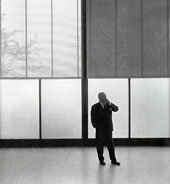
So don’t compromise the language of your glass and steel block: it’s sleek, it’s cool, it’s so Mies. Never mind that your building is a gas guzzler. Instead, quickly and painlessly insert the word sustainable into your writeup in the Architects Journal and get on with sketching your next project.
The real architectural challenge is not the art, but creating genuinely good buildings. The goal must be to integrate energy efficiency and renewables in a way that enhances the building – not empty gestures, gimmicks, and inappropriate use of technology, but real meat-and-potatoes design that’s got a shot at working in the real world.
To do this you have to have good communication in the design team, and a services engineer who’s sympathetic to architectural sensibilities. But sometimes the gulf isn’t bridgeable.
While an engineer is focussed on quantifying, the architect is concerned with qualities. The architects feel the architecture and it would ruin the building for them if they feel they are compromising it. It seems that for many architects, in terms of energy performance, as long as there’s something of the original intention in the final building that’s sufficient. The feeling is still there. On the other hand, the engineer watches the reality slip further and further away from the original design targets and it breaks his or her nerdy little heart.
What’s the answer? Well, we can’t put the engineers in charge or I suspect we’ll get a lot of very efficient hideous buildings – Soviet apartment blocks with lashings of insulation and megalomaniacal control systems. But the designs of some architects make me think that maybe they need another outlet for their less practical impulses.
Ah, now there’s a thought. Out of hours, they should be forced to set up virtual practices in Second Life where they can get the zaniest ideas out of their systems. Then come into work the next day ready to design for the real world. Might be worth a try.


 carbon limited
Leave a comment