Feeds:
Posts
Comments

Archive for the ‘energy’ Category

Sonderby

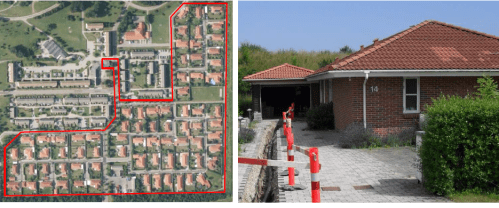
Heat network at Sønderby – images from linked design guide


When writing a recent post about the low temperature DH network at Lystrup, I contacted the author of the related technical report, Jan Thorsen. In Jan’s response he kindly included a copy of Guidelines for Low-Temperature District Heating (PDF).

This guide is essential reading for designers and operators of DH systems. It shows how DH with flow temperatures of around 55 and return temps of around 25 (also called “fourth generation” or “4GDH”) can be used to serve high efficiency homes as well as buildings on low heat density networks.

At this point you might say, hang on a minute – what are we doing considering 4GDH when we struggle to deliver decent 3rd generation (70/40) networks in the UK? And I’d say you’ve got a point. In fact, I spent a depressingly large chunk of last week trying to help salvage the efficiency of another new network that is horrendously oversized and was probably doomed to low efficiency before it even left the drawing board. So I’m sympathetic with the view that UK engineers need to get our houses in order before moving onto the cutting edge stuff.

But looking ahead to the strategies employed in more advanced, lower temperature systems helps to highlight the design principles that we should be focusing on, even on today’s projects in the UK.

(more…)

Read Full Post »

Highly efficient homes on Lystrup Network – img from linked report

I was recently given a copy of this fascinating report describing a 2-year study of a district heat network serving 40 highly efficient homes.

Using district heat in this way flies in the face of the prevailing view in the UK, which is that DH is incompatible with low energy housing. In this country we assume that low heat demand in homes means that heat losses from the network will always outweigh useful heat delivered.

But as you’ll see in this post, this view isn’t correct. The Lystrup Danish network serving near-Passivhaus-standard terraced homes has just 17% losses. Achieving this required a very low temperature heat network as well as careful design, commissioning and monitoring of the resulting system.

For engineers and district heat geeks, the report is packed with fabulous nuggets of information, the most interesting of which I’ve pulled out in the following post. If you’re not a DH geek, I imagine you’ve already stopped reading and are now watching Strictly.

Still here? Strap in and let’s GEEK OUT!

(more…)

Read Full Post »

I’ve done a blog post for the CHPA in the run up to the Heat 2014 conference on 5 November. Here’s the intro and link:

Metering and billing (M&B) is often seen as a necessary but rather dull cog in the district heating machine. For many heat network operators, heat metering is nothing more than a tool for ensuring customers are billed for the heat they consume. But it’s far more important than that. Heat metering can be used to monitor network efficiency, which can spell life or death for district heating schemes. Unfortunately, getting this performance data out of heat meters isn’t always easy…

Read the rest here.

Read Full Post »

This is the fifth post in a series on district heating. Here’s where to find  1, 2, 3 and 4.

So far we’ve looked at how poor design, installation or commissioning can doom a DH network to poor efficiency. In this post, I’ll briefly outline why it’s important to monitor and look after a DH network throughout its life, and what can go wrong if you don’t.

Most DH systems are commissioned and then ignored. It may be many months or even several years before anyone revisits the scheme to look closely at how it’s operating, usually prompted by something going badly wrong. The first casualty of network neglect is efficiency.

(more…)

Read Full Post »

Using Greg Barker’s written response to Caroline Flint on 19 December, here’s a sickening illustration of how the current government has eviscerated the UK drive towards domestic energy efficiency. And those 2013 ECO figures are from before the government gave in to Big 6 moaning and cut the ECO targets in half! It’s difficult to imagine a government caring less about energy efficiency, emissions and fuel poverty.

Insulation-after-CERT

Read Full Post »

All those bare components add up!

All those bare components add up

This is the fourth post in the series. If you haven’t yet, check out the first, second and third posts first.

Poor installation and commissioning can bring even the best designed network to its knees. In this post, I’ll look at some of the ways these crucial phases go wrong. First, installation:

(more…)

Read Full Post »

This is number 3 in a series on DH. Here’s where to find the first and second posts.

A key way district heating networks go wrong is through poor design. This can come from:

  1. a lack of good engineering
  2. a lack of relevant standards and guidance
  3. a perverse incentive for engineers to be overly conservative in order to protect their PI insurance
  4. clients not knowing what to ask for from their contractors

In this post, I’ll take a closer look at these problems.

(more…)

Read Full Post »

This is the second post in a series on DH. The first can be found here.

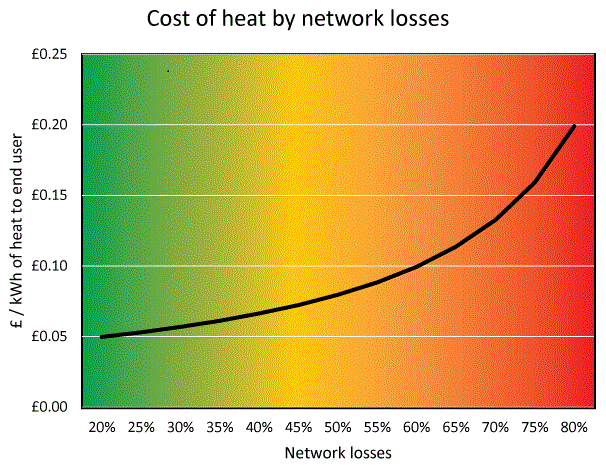
As I mentioned in my previous post, cost of heat on DH schemes is directly tied to system efficiency. The more efficient the system, the less fuel is needed to meet the heat requirements of the customers. And of course the reverse is also true: lower efficiency means higher cost of heat. This relationship between efficiency and cost is hugely important: it’s real cash, coming from residents to pay their heating bills and from the landlord or ESCO to pay the fuel bill.

In fact, I’d go as far as saying that efficiency is the single most important issue for DH schemes. This post explains why efficiency matters so much.

heat-price-by-losses1

(more…)

Read Full Post »

I’ve been talking to an electricity aggregator this week, exploring possibilities for getting better value for the electricity from small combined heat and power units (CHPs). This is important because better value for electricity = lower tariffs to the homes using the heat.

We were looking specifically at using these CHPs to take strain off the local grid during times of extraordinary demand. Having this spare capacity available in an emergency is worth a hell of a lot to the DNO, who runs the local network. In fact, for each megawatt of generation capacity, you might get paid several tens of thousands of pounds each year.

So what do you have to do to get paid? Just be ready to generate electricity at short notice. They’ll probably only call you 6 or 10 times each year, and probably only need you for an hour or so each time. Easy.

At last! The benefits of producing energy locally get some recognition, right? Well… no.

(more…)

Read Full Post »

In my last post, I said that “between a quarter and a third of current UK electricity generation capacity will come offline by the end of the decade.”

In a subsequent comment, Mel Starrs asked me for my sources. It’s such an important fact, I think it’s worth fleshing out.

(more…)

Read Full Post »

« Newer Posts - Older Posts »

Design a site like this with WordPress.com
Get started